
🎓Core English
Build confidence speaking and understanding English for university
Adverbs and Adjectives
Learn with a university lecturer with vast experience preparing students for success at university
Home > core English > adverbs and adjectives
We have learnt adverbs and adjectives in the previous two lessons, so now we can advance our understanding of both adverbs and adjectives with more advanced exercises. Good luck!
Oder of Adjectives
| Hre is the order of adjectives |
Determiner |
Opinion |
Size |
Age |
Shape |
Color |
Origin |
Material |
purpose |
- House – old, big, white
- How do we know the order?
The big old white house
The big old white brick house
The big old tall white brick house
- the
- beautiful
- big
- old
- tall
- white
- Thai
- brick
- farm
Same ‘category’
Try swapping them
- A tall, thin man
- A thin, tall man
called coordinated adjectives
Possessive Adjectives
The words my, our, your, his, her, its, their, when used before a noun, are called possessive adjectives.
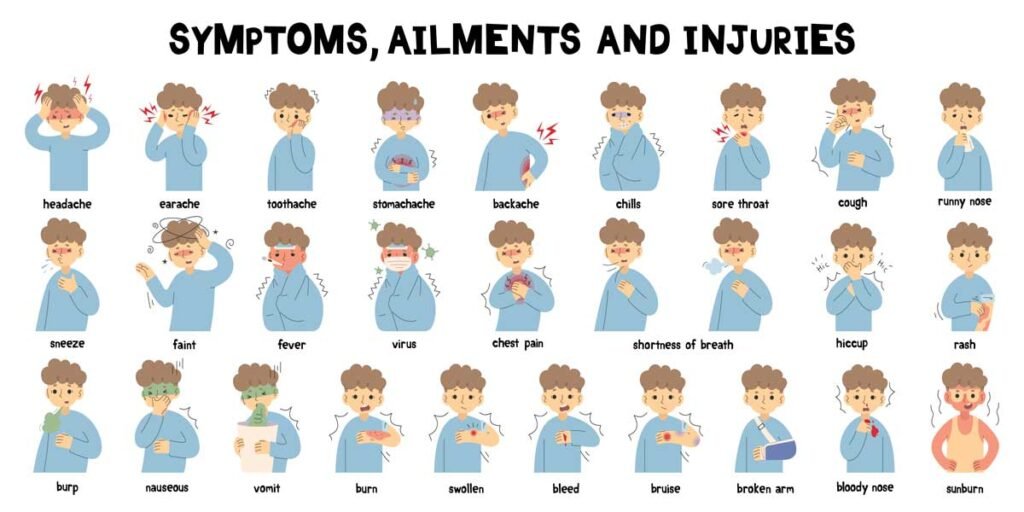
Possessive Adjective Exercise
Pre-Exercise Vocabulary
parts of the body
- leg
- wrist
- arm
- back
- elbow
- thumb
- eye
- ankle
injury or illness
- hurt
- bruise
- burnt
- rash
- cut
- infection
- sprained
Complete the sentences. Use the words in brackets in the correct order
- I’ve got a __________ on my ___________ . It __________. (leg, itches, rash)
- He’s __________ his ___________ . It’s __________ . (bleeding, hand, cut)
- I think I’ve got __________ . I’ve got a ___________ and I feel ___________ . (temperature, sick, flu)
- She’s __________ her ___________ . It’s __________ . (foot, painful, bruised)
- My __________’s ___________ . I’ve __________ it. (sprained, wrist, swollen)
Exercises
Worksheets
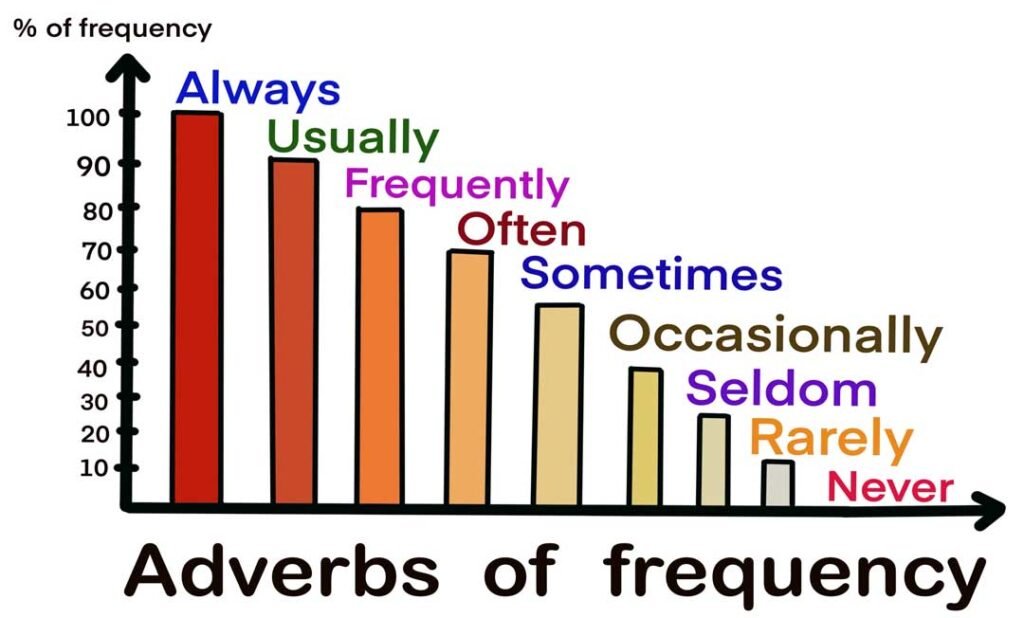
Adverbs of Frequency
- always
- regularly
- usually
- frequently
- often
- sometimes
- occasionally
- seldom
- rarely
- never
- He likes to do shopping occasionally
- She regularly waters the plants.
- He rarely joins any parties.
Resources for Adverbs and Adjectives
Reading Exercise
Celebrating Halloween
During Autumn in the United States, people enjoy a fun holiday called Halloween on the night of October 31st. Although it was once a religious holiday, today, it’s all about decorations, costumes, candy, and excitement.
Many folks love to carve pumpkins. They take an orange pumpkin or a similar vegetable and carefully carve a special design into it like a scary face. After that, they place a lit candle inside, turning it into a lantern. When the sun goes down, these carved creations glow brightly in the dark.
Halloween enthusiasts also enjoy decorating their homes. You’ll see figures of spooky creatures like vampires, ghosts, and zombies. Some even go for creepy stuff like bugs, spiders, and fake gravestones.
Most of the time, Halloween is for the kids. Children put on costumes, which can be anything from their favorite movie characters to mythical monsters, and go from house to house. They knock on doors, and when they’re answered, they say, “Trick or Treat.” In return, they receive delicious candies.
Not many grown-ups celebrate Halloween, but those who do often attend fun parties. So, whether you’re young or old, Halloween offers something enjoyable for everyone.
Did you understand the text? Answer these questions:
1. Where does Halloween take place?
- a) Ireland
- b) United States
- c) Canada
- d) Australia
2. What kinds of spooky creatures are often featured at Halloween?
- a) Witches and wizards
- b) Vampires, ghosts, and zombies
- c) Fairies and elves
- d) Pirates and superheroes
3. What is commonly carved to create a Halloween lantern?
- a) Watermelon
- b) Orange pumpkin
- c) Cabbage
- d) Pineapple
4. One can expect to see all of the following types of decorations on Halloween except:
- a) Spiders and other bugs
- b) Trees, lights and snowmen
- c) Gravestones and zombies
- d) Vampires
5. What do children receive when they say “Trick or Treat” during Halloween?
- a) Toys and games
- b) Delicious candies
- c) Money and gifts
- d) Colorful balloons
PDF download and more reading practice exercises at reading comprehension exercises
"She loves her dog."